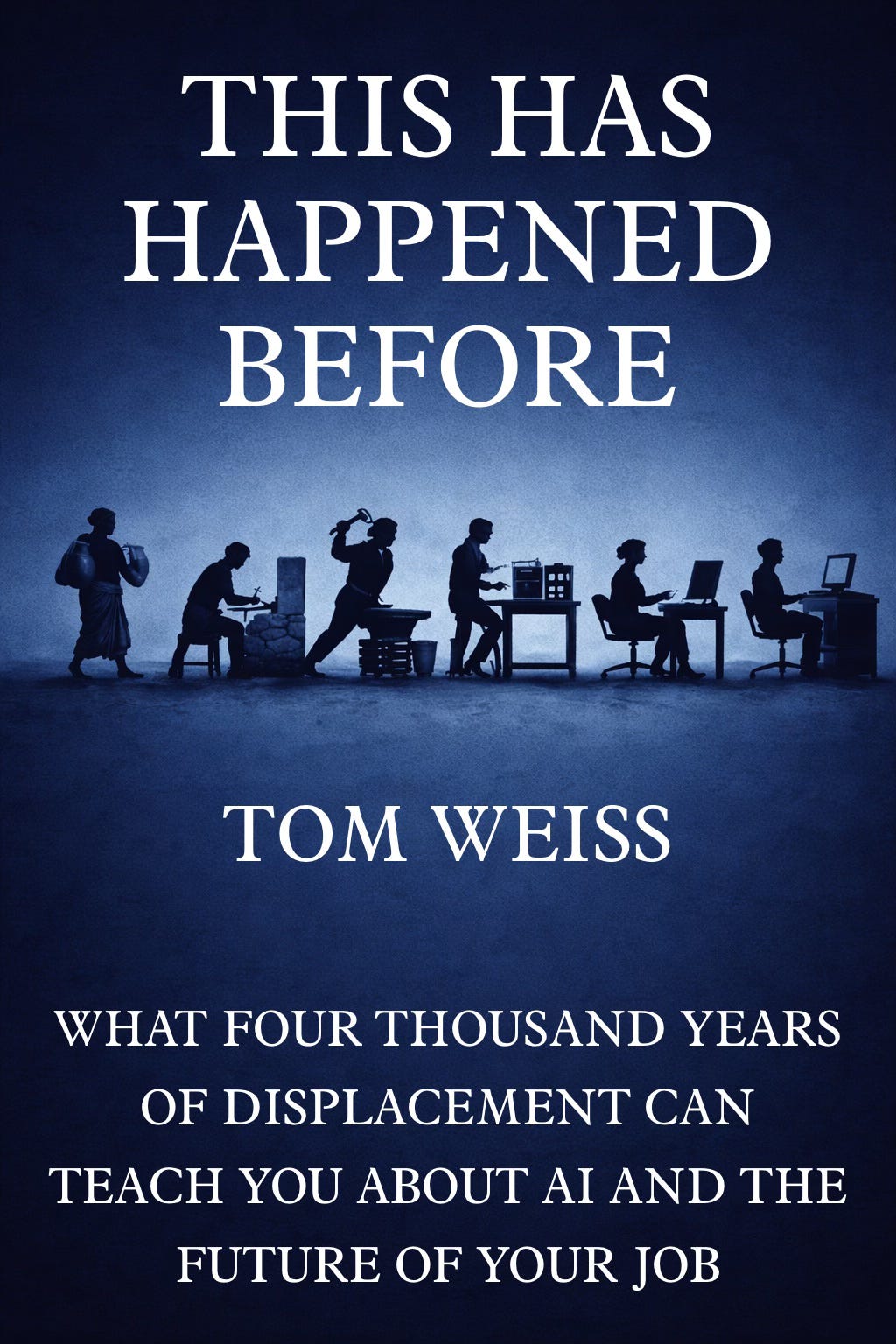
This has happened before
Or why I wrote a history book about AI

This week, tech layoffs passed 45,000 globally in March alone, with one in five explicitly linked to AI and automation. The headlines are not subtle. But neither is the gap between what the headlines tell you and what you can actually do about it.
The optimists say: Don’t worry, we always adapt, technology creates more jobs than it destroys. They’re not wrong, exactly. But “the economy eventually adjusts” is not advice that pays your mortgage next year while your company decides whether to staff or automate your function.
The pessimists say: the end is coming, this time is different, you’re going to be obsolete. There’s real ground under that concern. But “you’re doomed” isn’t advice either.
What I couldn’t find was whether something was honest. Something that said, "Yes, displacement is real.” People lose jobs, markets shrink, and valuable skills become worthless. And also: some people navigate it. Some sectors contract instead of disappearing. Some companies choose differently. Some skills prove more durable than expected. And yes, there are things you can actually do about it, but you have to understand what’s really happening first.
So I went looking at the historical record.
If you’ve read this Substack before, you’ll know I’m fascinated by what happens when technology makes skilled work cheap. Not just modern history, but far enough back that the outcomes were settled, the myth-making had mostly stopped, and we can see the real patterns clearly.
So I’ve written a book about water carriers in Egypt. Spinners in Yorkshire. Travel agents in Atlanta. Craftspeople. Clerks. Skilled workers whose expertise was suddenly available for a fraction of the cost. What actually happened to them? Did they retrain? Did they get crushed? Did entire occupations vanish, or did they shrink and adapt?
I found 19 stories spanning 4,000 years. Egypt 2000 BC to Chicago 1983. From the Bronze Age collapse to the early personal computer era.
The patterns repeat with uncomfortable consistency.
What surprised me most wasn’t how often displacement happens. It’s that the outcomes follow predictable lines. Whether we’re talking about farmers with iron tools in 1200 BC or accountants with spreadsheet software in 1985, the same three or four things determine what happens to the people in the middle. And nobody talks about them. The popular narrative is either “everything changes” or “people adapt”. Both are useless. The actual story is much stranger and much more useful than either.
This book is not about AI. It’s about what happens when skilled work becomes cheap. That’s happened before. Many times. And we have a record of what works and what doesn’t, what gets people through and what leaves them stranded, what to do with a 3-year window, and what to do when the window closes without warning.
I wrote it for people like the ones I talk to every week at MX8. People doing real work that requires judgment, expertise, and time—and watching AI tools do parts of it faster. People are wondering whether they’re being paranoid or should take action. People who want straight talk, not reassurance, and not dread.
If you’ve been thinking about AI and your career the way most people have, as a future abstract problem, this book asks you to think about it the way historical people had to: as something happening right now, in real time, with real decisions to make today.
The core lesson isn’t comforting. But it’s actionable. And it’s based on what actually happened to actual people in situations very much like yours.
This Has Happened Before is available now. on Amazon.
If you read it and find it useful, I have one ask: leave a review on Amazon. The book is new, reviews matter more than you’d think at this stage, and I’d genuinely appreciate it.